
Three real-world examples of how Hard Reach Environmental gets in, gets it done, and leaves sites in better shape than we found them.
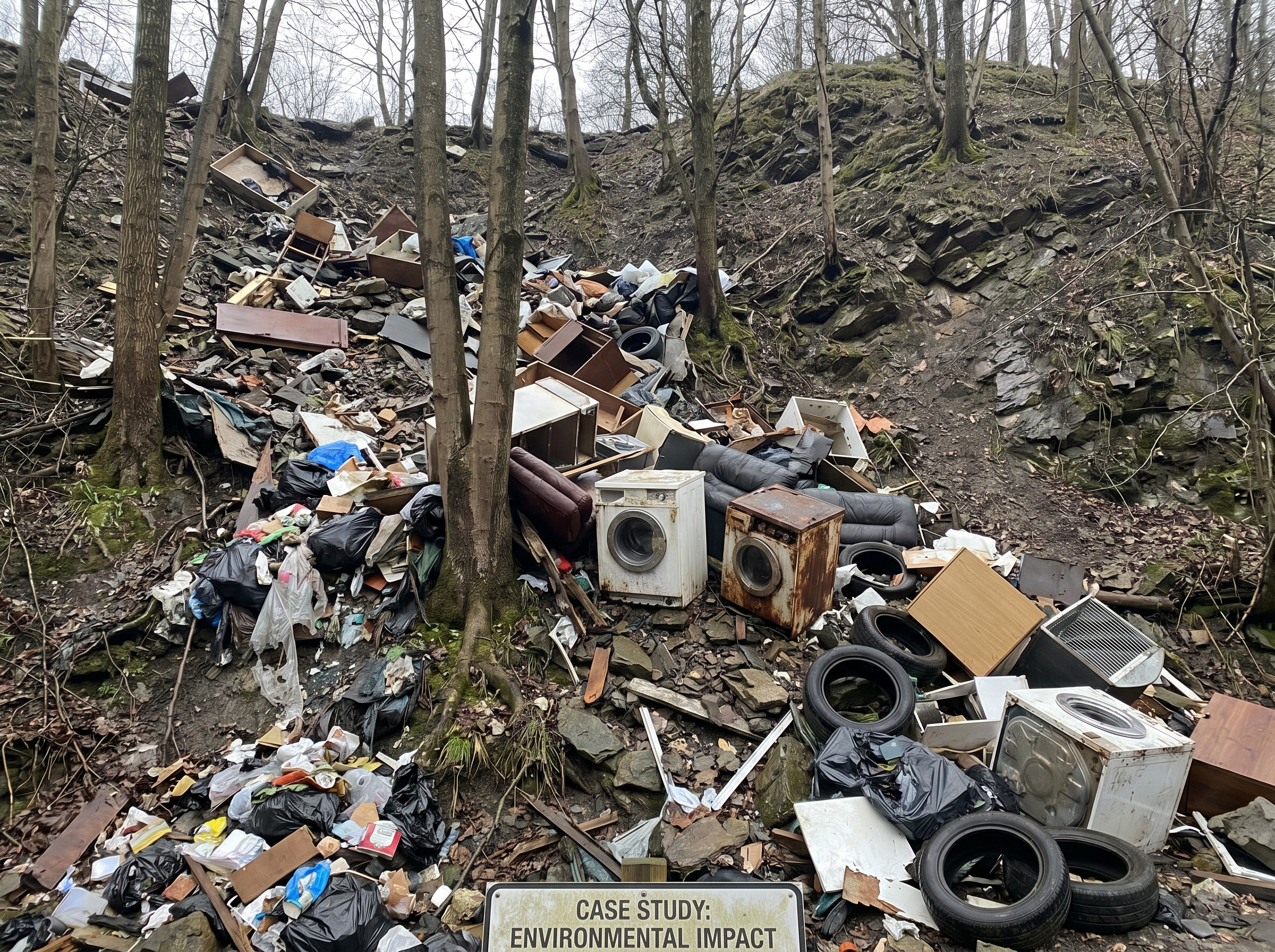
A section of the Niagara Escarpment within Hamilton city limits had accumulated years of illegal dumping along a 55-degree embankment face. The material — construction debris, appliances, tires, mixed refuse, and several bags of suspected hazardous waste — had been fly-tipped from an access road above and had cascaded 30+ metres down the slope face. The property owner had been unable to get a single contractor to quote the job.
Hard Reach Environmental conducted a full slope assessment before mobilizing. We identified three safe descent lines, established top-anchor rigging points, and deployed a six-person crew with rope access equipment and hand tools. Given the slope angle and proximity to a naturalized woodland corridor at the base, we ruled out mechanical equipment entirely — all extraction was manual, using rigging lines and haul systems to move material up-slope to the access road.
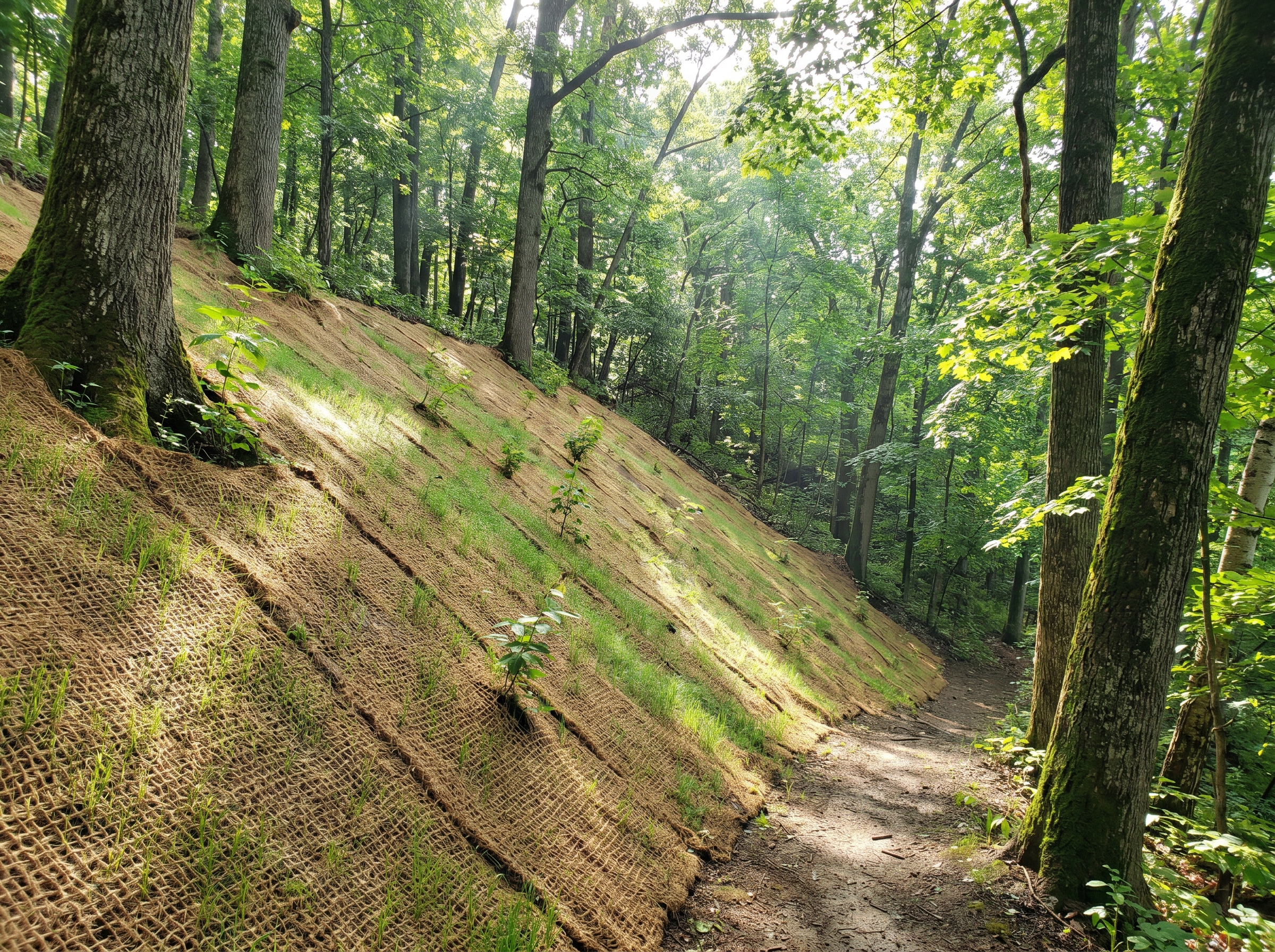
Waste was segregated on-site into regulated, recyclable, and general refuse streams. Suspected hazardous material was containerized and transferred to a licensed facility under manifest. Over three weeks, the crew cleared the entire embankment face, with erosion matting and native seed mix applied to all disturbed soil areas at close-out.
Private landowner — escarpment-adjacent residential property. Referred by Hamilton Conservation Authority.
Operations conducted under Hamilton Conservation Authority permit. All hazardous waste transferred under Ontario Regulation 347 manifest.
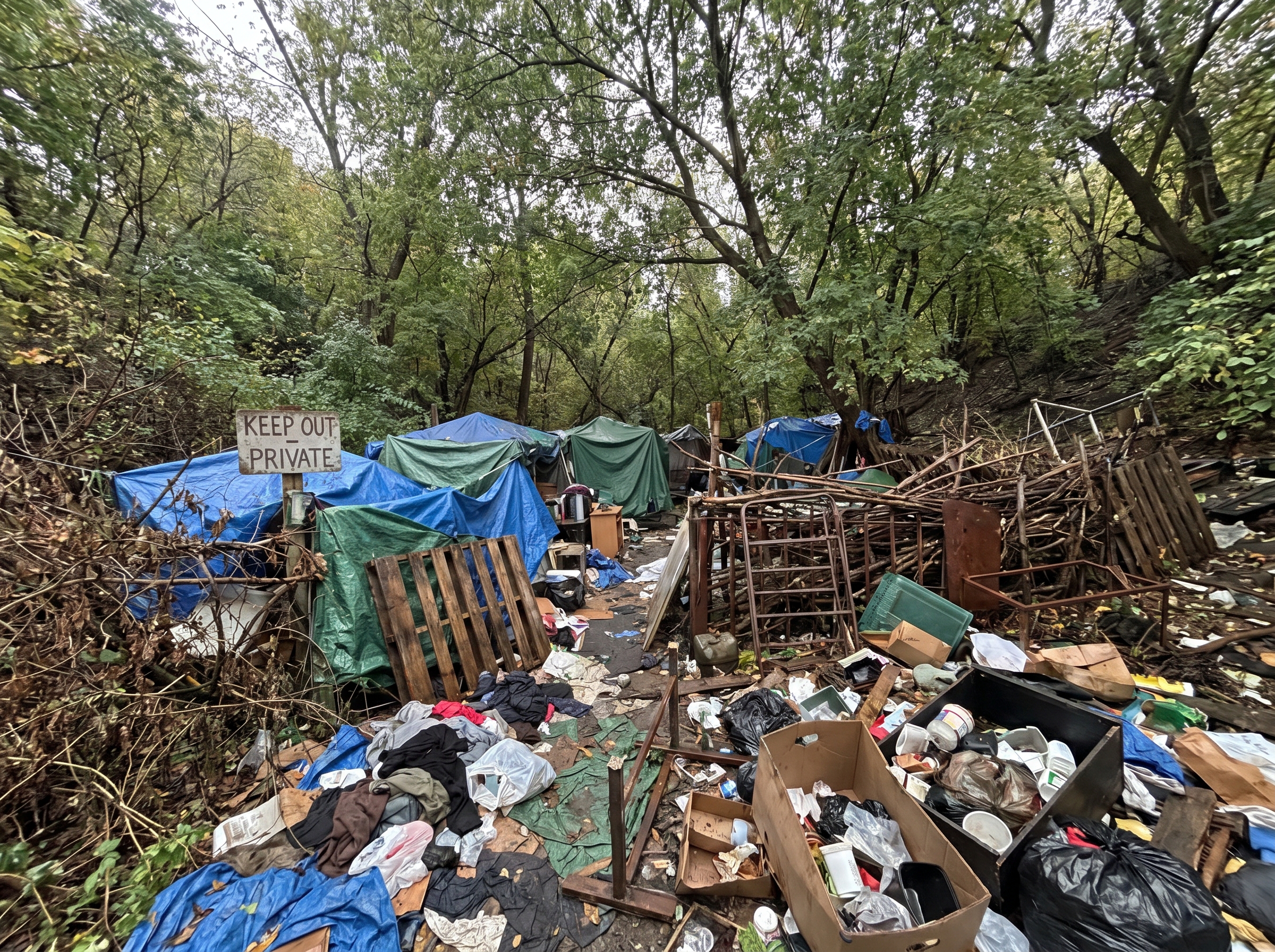
The City of Hamilton contacted Hard Reach Environmental regarding a long-established encampment within a municipal ravine greenway. The site had been occupied for an extended period, and standard parks and public works crews were not equipped — from a training or equipment standpoint — to safely manage biohazard waste, sharps, and the volume of material present. Previous attempts to address the site had stalled due to the combination of terrain access and waste type challenges.
Before mobilizing, our project manager conducted a full site walk with the City's parks liaison and a social services coordinator. We documented the encampment footprint, identified biohazard zones, and planned a two-phase approach: waste removal followed by site restoration.
Phase one deployed a four-person crew in full biohazard PPE — Level B suits, face shields, puncture-resistant gloves, and steel-toed boots. Sharps were collected into approved containers first, before any general debris was touched. Biohazard material was double-bagged and manifested. Improvised structures — wood-frame shelters, tarps, pallets — were dismantled and removed. The entire site was photo-documented throughout.
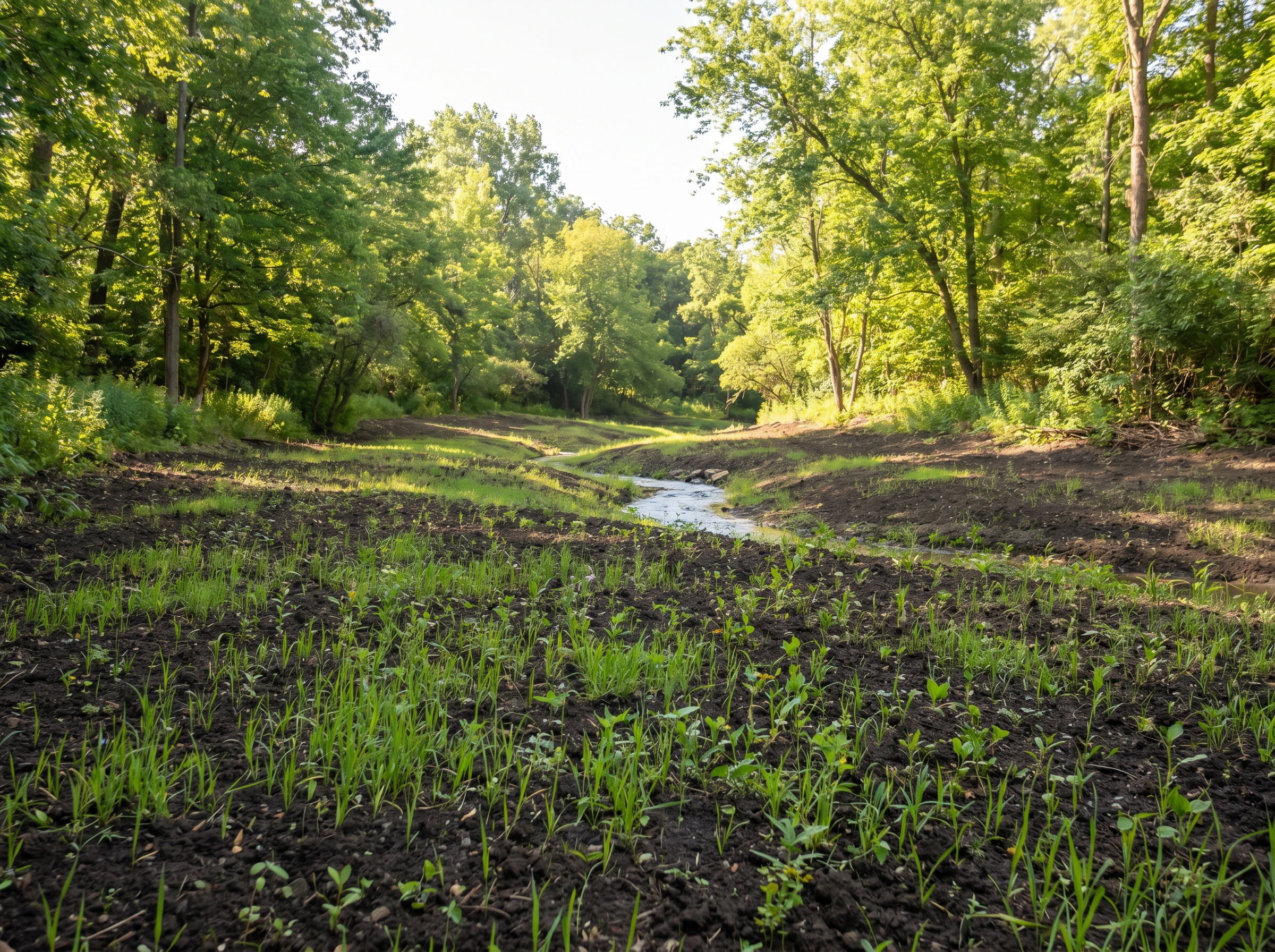
Phase two focused on site restoration: raking and grading the soil footprint, applying deterrent rock mulch in key areas to reduce re-occupation risk, and seeding disturbed zones with a native grass and wildflower mix appropriate to the ravine environment.
City of Hamilton — Public Works and Parks Division. Multi-department coordination including social services liaison.
Biohazard and sharps disposal under Ontario Reg. 558/00 (Waste Management — Special Wastes). Site restoration coordinated with Hamilton Conservation Authority.
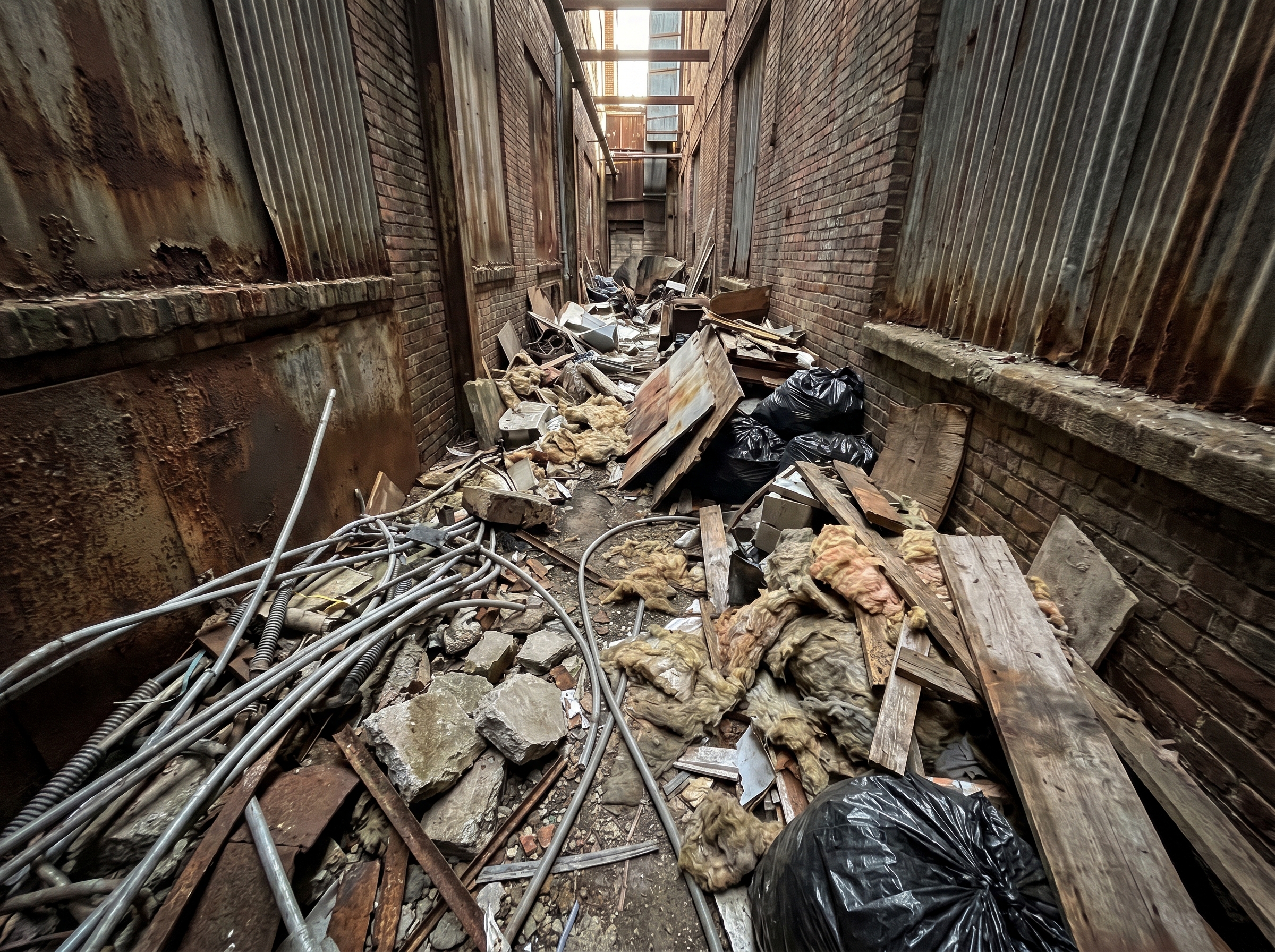
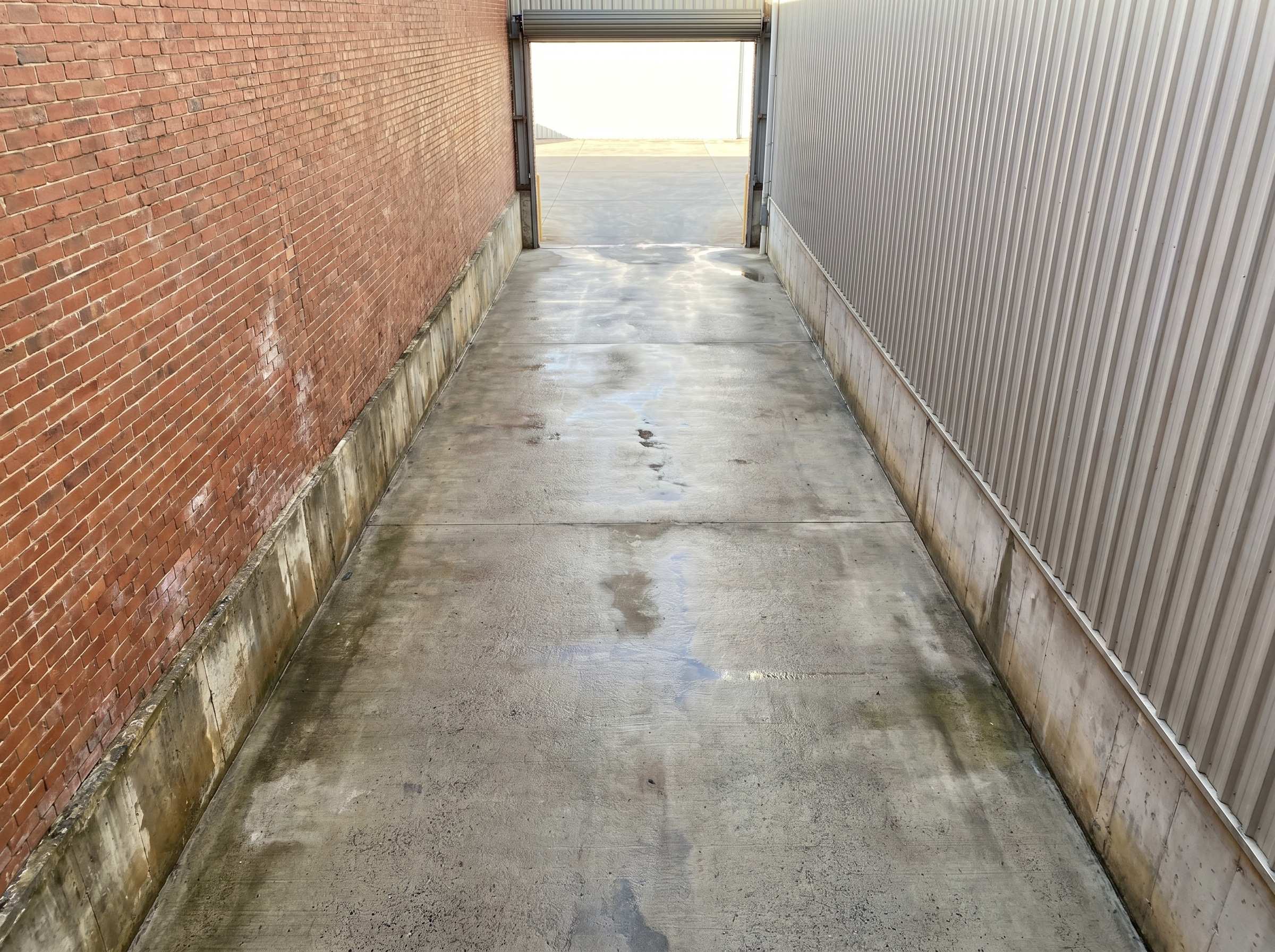
A commercial property owner in Hamilton's industrial corridor had an accumulation of construction debris, scrap metal, and mixed waste in a narrow utility corridor running between two buildings — approximately 2.8 metres wide and 60 metres long. The corridor had no vehicle access from either end, and the material had been accumulating for several years following renovation work. The property owner had been quoted by three haulers, all of whom declined due to access limitations.
Hard Reach Environmental assessed the site and proposed a track-based compact equipment solution combined with a manual relay system. A rubber-tracked mini-skid was brought in via a neighbouring property with written permission, small enough to operate within the 2.8-metre corridor width. A hand-relay chain was established from the far end of the corridor to the skid's operating range.
Material was segregated as it was moved: scrap metal to one bin, clean fill to another, mixed refuse to a third. Potential asbestos-containing material (ACM) identified in some drywall sections triggered our protocol — work was halted in that zone, samples were collected, and a licensed abatement contractor was brought in to assess and remove the flagged material before our crew resumed. This is exactly the kind of mid-job regulatory awareness that protects property owners from serious liability.
The project was completed in two weeks — three days ahead of the original schedule. The corridor was left clear, swept clean, and the property owner received a full close-out report including photos and all waste manifests.
Commercial property owner — industrial sector. Referred by commercial property management company.
ACM abatement coordinated with licensed contractor under Ontario Reg. 278/05. All waste manifested under Ontario Reg. 347. Full close-out documentation delivered to client for regulatory records.
Tell us what you're dealing with — terrain, access limitations, waste types, urgency. We'll come out, assess it honestly, and tell you exactly what it takes to get it done right.